
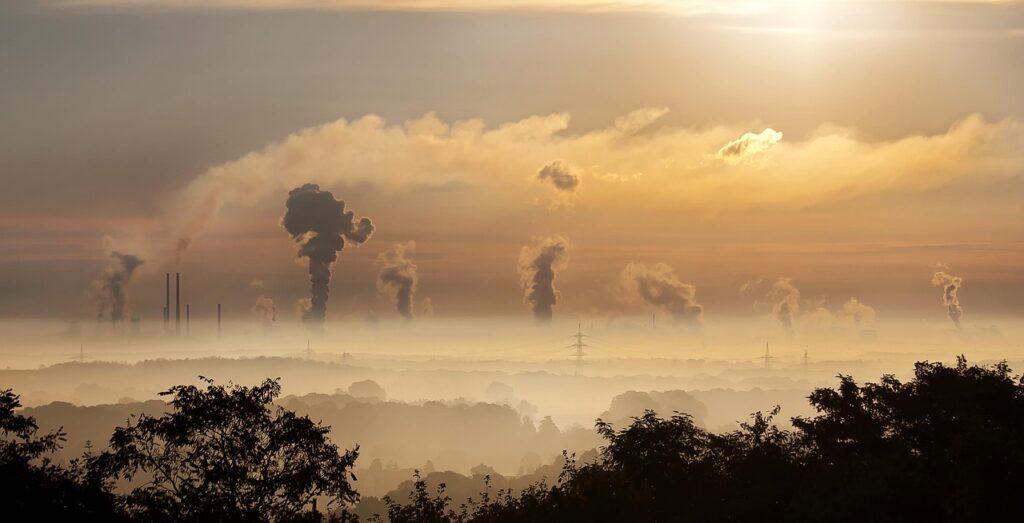
As greater signs of climate breakdown emerge, there is no doubt that we are entering critical times. In such times, the question of the how Paganism and the environmental crisis can interact has emerged in my mind. I think about this because it only makes sense to me that Earth-based religions play a role in helping motivate change.
But with the way that many modern Pagan religions have been practiced, there hasn’t always been the clearest connection between Paganism and earth-consciousness, despite adherents often claiming to be following an earth-based religion. Many Pagan practitioners have in fact figured out spiritual practices that connect the environment and their own spiritual practice. But resources for the newcomer to Paganism to make those connections haven’t always been obvious. Often the seeker is on their own to figure out how to integrate spiritual practice and sustainable living.
Paganism and “knowledge”
Before I get too deep into the subject of Paganism and the environmental crisis, let me start by saying that I consider myself to be more or less an agnostic. The word “agnostic” comes from the Greek word “gnosis,” which refers to knowledge. The “a-” prefix in this case means “not, without, or opposite of.” So agnostic simply means “I don’t know.”
However, “not knowing” isn’t the same as “not believing.” You can believe in something and acknowledge that you’re not 100% sure it’s true. An atheist can either be an agnostic atheist, saying that they don’t believe in any gods, or they can be a “gnostic atheist,” meaning that they insist that they know that no gods exist. On the other hand, a “gnostic theist”—theists meaning a belief in a god or gods, insists that they do know that a god or gods exist.
I say this because most modern religions have blurred the line between belief and knowledge, frequently turning it into a black-or-white thing. For two to three thousand years, there have been organized religions acting as if there is only one truth, and they know that truth. Not all followers of these religions have acted that way. But the leaders of these religions have insisted on religious certitude as if it that were a virtue. One need only look at the heinous things done in the name of religion to know that this isn’t true.
So when first thinking about the role of Paganism, it makes sense to take a critical look at the role that religions have played. We can’t enter into a crisis with the type of dogmatic approaches that have caused other people in the past to suspend their best judgment and do atrocious things they might not otherwise do.
Science and religion
Over the last 500 years or so, another form of “gnosis”–science–has grown in prominence. Science has established a method to arrive at the truth of something. And one thing that this form of gnosis has brought us is increasingly undeniable proof that we are destroying the ecosystem that sustains us, and at an increasingly alarming rate.
It’s very interesting to me, because the Western world a few weeks ago finished a season celebrating something that many people believe happened around 4 BC—the birth of Jesus Christ. Two thousand years later, this event which may or may not have happened (I personally don’t believe in the “virgin birth” story) has inspired such pomp and pageantry to create its own genres of music that only appear one to two months per year and inspire the busiest retail season of the year.
But when we look at what is happening with the Earth today, which date in human history is more important? Four BC or 2026 AD? Note too that these BC and AD dates are themselves based on the estimated moment of this “virgin birth.” These are numbers from a system made up by human beings.
Unconscious thoughts surrounding our worldview
Besides the Christian religion, what else has shaped our view of the Earth in this way? Most if not all of us are conscious of how racism has shaped our unconscious thoughts. Racism, Christianity, capitalism, and exploitation of the Earth have been tools of European colonialism, and these can also arguably be blinders that keep us from understanding the crisis in which we live.
Does it then follow that Paganism can alter this distorted view of our Earth and its ailing eco-system? The answer is: it depends.
Modern Paganism developed from primarily two things: disenchantment with modern-day Abrahamic religions, especially Christianity, and a desire to restore a Pagan culture. These Pagan religions’ ties to the earth were primarily agricultural in their basis, and as such usually observed the cycles of the Earth. But in my earliest explorations of modern neo-Paganism and seeking a religious practice dedicated to the Earth, I ran into a lot of dead-ends. When it comes to thinking about Mother Earth, plenty of Pagans will give lip service, but not be able to articulate what they are doing about the environmental crises.
But one of the nice things about modern Paganism is that we have maximum freedom to develop the religion we want to practice, which is one of the reasons why so many Pagans are solitary practitioners. I would argue that the only restriction on developing religion is to avoid cultural appropriation , which I’ve touched on before, and not doing harm to others.
Understanding Mother Earth on her own terms
But I think a big part of that spiritual exploration starts by understanding the Earth on her own terms, rather than simply through the lens of human needs. While ancient agriculture was far less destructive than our modern industrial society is today, it is also true that even ancient agriculture caused extinctions of species. Through conflicts over land and resources, it also caused extinctions of cultures as well.
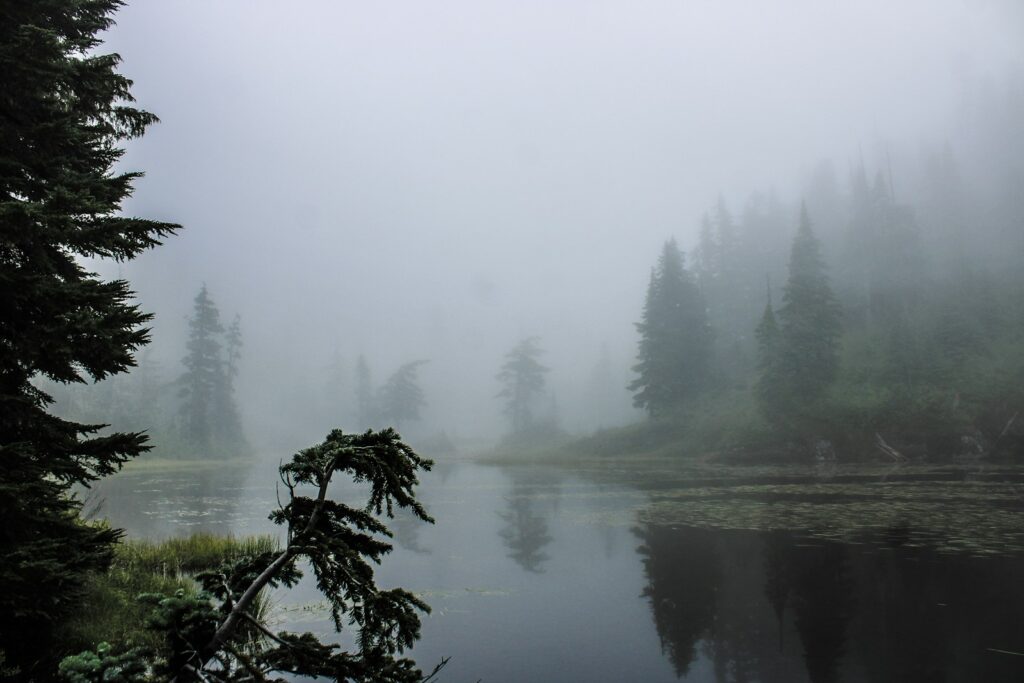
What understanding Earth on her own terms looks like is something I’m still trying to figure out, but I’ve figured out some pieces of it. Spending time in nature is helpful. A few weeks ago, I was standing at the edge of a six mile-long lake and realized that there is an entire world under the water that I never see, with its own life forms, its own systems and own challenges. Walking into that world be impossible for me without scuba gear and a wetsuit, and I can’t rule out the possibility that a muskie or pike might feel threatened and attack me.
Science has given us immense but not complete understanding of our ecosystem. But our ecosystem is not just a system talked about in biology class. It is an interconnected system of worlds that we are just beginning to know. Our hunter-gatherer ancestors and some of those in horticultural societies had an understanding of these worlds that was deeper than our own.
Some tech entrepreneurs believe that you can govern society through technocrats using science technology alone–separate from the interpersonal connections that make up a society. I think most of us instinctively know that not to be true.
If we don’t want a technocracy governing humans, it would seem to follow logically that we can’t manage the Earth in a technocratic way either. We have to not just know how the Earth works, but actually know the Earth in the same way we know other people.
So, this is just the beginning of a role that we can see Paganism take on. There is much more to discuss about the subject of Paganism and the environmental crisis. This brief essay touches on just the tip of the iceberg. Personally, I feel like I’m starting to get more clues as to what a more Earth-oriented Paganism might look like, but I personally have a long way to go.